
Table of Contents
What do people mean when they search for “voodoo spells”? The phrase can refer to different practices, beliefs, or services, depending on who is using it. It’s understandable to feel unsure: popular media often reduces complex spiritual traditions to curses, dolls, or dramatic magic, while online explanations can contradict one another.
Approaching the subject with care means recognizing that Vodou, Louisiana Voodoo, and Hoodoo have distinct histories and meanings. They shouldn’t be treated as interchangeable or as fictional magic stripped of cultural context. It also means being clear about expectations: spiritual services can’t promise a particular outcome, and your choices remain your own.
This article explains what people may mean by voodoo spells, why cultural distinctions and thoughtful language matter, and what to consider before exploring spiritual services. You’ll find ways to assess claims, clarify your intentions, and keep your wellbeing and personal agency in view as you decide what feels right.
Key Takeaways
- The phrase “voodoo spells” is used in different contexts, so one meaning can’t apply to every practice.
- Vodou, Louisiana Voodoo, and Hoodoo have distinct histories and shouldn’t be treated as interchangeable labels.
- Spiritual belief and personal meaning are different from fixed formulas or promises of a particular outcome.
- Before seeking spiritual support, name your concern, clarify your intention, and consider practical choices and consent.
- Voodoo and Magic offers spell-casting services through voodoo and magic spell priests. Consider your expectations before exploring the service.
What Are Voodoo Spells? A Clear Starting Point for Beginners
A useful starting point is to think of a spell as a spiritual or ritual practice shaped by a person’s beliefs and intentions, not as a guaranteed way to produce a particular result. People may use “voodoo spells” to describe very different things: practices they understand within a specific spiritual tradition, ideas borrowed from popular culture, or a service they’re searching for online.
That difference matters. A search phrase can group together material with little in common, while a living tradition has its own history, community, and meaning. This section offers context, not a universal recipe or a single authoritative definition. Spiritual intention may give a practice personal meaning, but it can’t make real-world outcomes certain.
What does the phrase voodoo spells mean?
As a search term, “voodoo spells” is broad. It isn’t the name of one uniform ritual system. Someone might use it casually to look for spiritual support, while another person may mean a practice connected to a particular community or tradition. Those uses shouldn’t be treated as equivalent.
Tradition-specific beliefs and practices deserve to be understood on their own terms. For an introductory overview of one distinct tradition, see Haitian Vodou: Cultural Context and Practice. No single overview can represent every practitioner or settle how a term is used across communities.
Why popular images can distort the subject
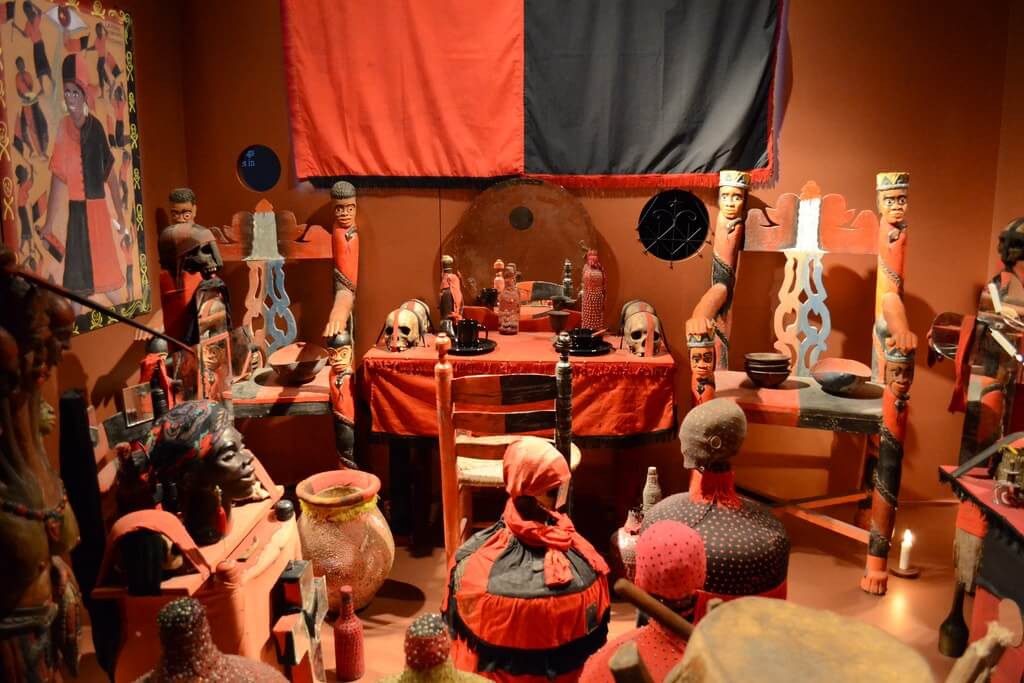
Fiction and visual media often make complex spiritual subjects easier to recognize by reducing them to a few striking props or dramatic scenes. This can create the impression that every practice follows the same formula, or that spectacle is the best way to understand a tradition. Neither assumption provides much cultural context.
An image board can spark curiosity, but it isn’t a historical source or a reliable guide to what a community believes. Treat images as creative inspiration, not evidence. Ask what context may be missing, and don’t assume that a symbol or object has one fixed meaning across different people and traditions.
A steadier approach starts with careful language: describe the specific tradition or source when you know it, and acknowledge uncertainty when you don’t. This helps separate a fictional portrayal, a personal spiritual interpretation, and a community’s own account of its beliefs. When evaluating an explanation, look for the tradition it refers to and whether it distinguishes what is known from what is assumed. That won’t answer every question, but it can prevent a single image or claim from standing in for a varied subject.
Voodoo, Vodou, and Hoodoo: Why Cultural Context Matters
Similar spellings can make these terms look interchangeable, but they point to different histories and uses. Haitian Vodou is a religion with roots in West African traditions and a central place in Haitian life. Louisiana Voodoo developed through distinct histories in the Americas. Hoodoo, also called rootwork, is commonly described as an African American folk spiritual practice. These brief descriptions are starting points, not complete accounts of communities with varied beliefs and experiences.
Context matters more than a dramatic label: it helps us understand a practice through its people, history, and meaning rather than through a stereotype.
How to use Voodoo and Vodou carefully
Spelling and preferred usage depend on the tradition, community, and context. “Vodou” is often used for the Haitian religion, while “Voodoo” may refer to Louisiana traditions or appear as a broad popular label. These patterns can help orient a reader, but they aren’t universal naming rules; people and sources may use terms differently.
Be specific where you can. If discussing Haitian Vodou, name that tradition rather than treating it as a stand-in for every practice called Voodoo. For historical or religious details, use sources focused on the particular community, and avoid assigning one belief or ritual to all practitioners. The history of racist portrayals of Voodoo is also a reminder that terminology can carry assumptions shaped by outsiders.
Why Hoodoo should not be treated as a synonym
Hoodoo is often described as an African American folk practice, sometimes called rootwork, rather than another name for Haitian Vodou. The distinction is useful, but a short comparison can’t define either tradition in full. Histories, words, and practices may vary, and some labels are contested or used differently by different people.
When you encounter “voodoo spells,” pause before assuming it identifies a specific tradition. Check whether the writer names a community or history, or is simply repeating a popular label. That small step can prevent an online description from turning into a sweeping claim.
- Name a specific tradition when the source supports it.
- Keep broad labels broad, rather than attaching one community’s beliefs to everyone.
- Treat uncertainty as a reason to seek better context, not to fill gaps with assumptions.
After learning about these distinctions, readers who wish to explore spiritual services can learn about Voodoo And Magic’s voodoo spell-casting through voodoo and magic spell priests. Visit the voodoo spell-casting service with your expectations grounded and your own choices at the center.
Common Voodoo Spell Misconceptions: Separate Tradition from Fiction
Familiar images can make a complex subject seem simpler than it is. Stories often repeat the same props, curses, or dramatic effects until they appear to define an entire tradition. But a recurring image isn’t proof of a universal practice, and a confident description online doesn’t establish that every practitioner or community shares the same beliefs.
A grounded approach leaves room for spiritual meaning while staying clear about what can and can’t be promised. That distinction matters especially when someone is worried, grieving, or hoping for change.
Are voodoo spells always about dolls or curses?
No single object or frightening scenario defines all spiritual practices associated with the phrase. Dolls and curses are familiar in popular portrayals, but those images shouldn’t be treated as universal features or reliable guides to a particular community’s beliefs. A symbol’s meaning, if it has one, depends on its context.
For example, seeing a doll in a film or online image doesn’t tell you how a real practitioner understands it, whether it belongs to a specific tradition, or whether it is used in a ritual at all. The same caution applies to claims that every spell follows one fixed sequence. A description that presents one formula as universal is making a broad claim, not establishing a shared rule.
When reading about a practice, separate what a source directly explains from what it merely depicts. Check whether it identifies a community and offers context, or relies on a dramatic image to represent a whole tradition. That distinction helps keep fiction from being mistaken for cultural knowledge.
Belief, spiritual meaning, and claims of certainty
People understand spiritual practice through different beliefs and personal experiences. For some, ritual can express hope, devotion, or a desire for steadiness during a difficult period. Others may interpret the same practice differently. Respecting those perspectives doesn’t require presenting spiritual claims as proven facts, and it doesn’t mean dismissing what a practice means to someone.
A spiritual practice may hold deep personal meaning, but that meaning is not evidence of a guaranteed real-world outcome. No description of voodoo spells should be treated as certainty that another person will act a certain way, that a relationship will change, or that a difficult circumstance will resolve on command.
Be especially cautious of statements that turn ordinary hardship into proof of a curse, then use fear to demand urgent paid intervention. Misfortune alone can’t establish that a spiritual cause is responsible. Pause, consider practical explanations and sources of support, and avoid making pressured decisions while distressed.
- Notice whether a claim distinguishes belief from certainty.
- Be wary of universal formulas presented without context.
- Keep your choices and practical wellbeing in view while exploring spiritual ideas.
How to Approach Voodoo Spells Thoughtfully and Keep Your Agency
Spiritual reflection can feel meaningful during heartbreak, uncertainty, or a difficult change, but it should support your judgment rather than replace it. Before exploring a practice or service, take time to name what’s happening and decide what kind of support you’re seeking. A pause can help you distinguish a wish for spiritual grounding from a decision that needs practical attention.
Clarify your intention before seeking spiritual guidance
Begin by describing your concern in plain language. “I’m hurting after a breakup” names distress without assuming that spiritual harm caused it. Then consider what you hope to gain. Seeking peace, clarity, or space to reflect keeps the focus on your own well-being rather than on controlling another person’s choices.
This short reflection can help:
- Name the concern: Write down what’s troubling you and what you know. Don’t turn fear or uncertainty into proof of a spiritual cause.
- Clarify your intention: Identify whether you’re seeking comfort, perspective, or a sense of direction.
- Consider practical choices: Note one action within your control, such as having an honest conversation, setting a boundary, or seeking support from someone you trust.
This doesn’t diminish spiritual belief. It gives you a grounded starting point and keeps any exploration connected to your own values and decisions.
Keep boundaries around consent and certainty
Relationships involve more than one person’s wishes. If your concern involves a partner, former partner, or another individual, their boundaries and right to choose still matter. Frame your hopes around your own clarity and wellbeing, not a demand that someone else act, return, or change.
Step back if a service is presented as guaranteed, or if pressure or fear is used to rush your decision. You’re entitled to take time, consider what feels right, and decline anything that doesn’t sit comfortably with you.
Keep spiritual reflection distinct from professional guidance. For a health concern, consult a qualified medical professional; for a legal or financial decision, seek appropriate professional advice. Relationship support from a counsellor or another qualified professional may also help you consider your options. Spiritual practice can be meaningful to you, but it shouldn’t replace care that addresses a practical or acute need.
Approaching voodoo spells with care means staying connected to your own agency. You can explore spiritual support while making informed choices, respecting others’ autonomy, and using practical resources when needed. If you’d like to explore Voodoo And Magic’s voodoo spell-casting service, learn about the spell-casting service and consider whether it fits your intentions.
Explore Voodoo And Magic’s Spell-Casting Services with Clear Expectations
After considering cultural context, intention, and personal agency, you may decide that spiritual support is worth exploring. You may also decide it isn’t right for you. Either choice is valid. Seeking a service shouldn’t come from fear, pressure, or the belief that you must act quickly to prevent harm.
What the business offers
Voodoo And Magic offers voodoo spell-casting through voodoo and magic spell priests. The service is described here without assigning it a ritual formula or promising a particular result. The business also offers love spells, lottery spells, psychic readings, curse removal, and black magic removal.
These are distinct spiritual services. Learning about them doesn’t require you to accept a specific belief or decide that one is necessary. Consider what you’re seeking, how a service fits your intentions, and whether you feel comfortable exploring it. A service description can explain what is offered, but it shouldn’t be mistaken for certainty about what will happen in your life.
A calm next step for interested readers
If you’re considering an appointment, put your intention into your own words first. You might be seeking spiritual reflection during a difficult transition, or simply wanting to learn more about spell-casting. Being clear about your hopes can help you approach the subject thoughtfully, without treating a service as a substitute for your own decisions or practical support.
Keep your expectations grounded. No spell can be presented as a guaranteed outcome, and no one should make you feel that you have to pursue one. If a concern involves another person, their choices and boundaries remain their own. If it involves health, legal, financial, or immediate personal safety matters, use appropriate practical or professional support alongside any spiritual reflection.
Appointments are an available next step for readers who have considered their intentions and would like to explore Voodoo And Magic’s services. There’s no need to rush or pursue a spell if it doesn’t feel right for you. Review the offering in your own time and decide whether it aligns with what you’re looking for.
If you’re ready to learn more, explore Voodoo And Magic and take the next step only if it feels considered and right for you.
Choose Your Next Step with Clarity
Curiosity doesn’t obligate you to act. You can take what you’ve learned, reflect on your intentions, and decide whether spiritual support feels meaningful now, later, or not at all. A considered choice leaves room for practical support, personal boundaries, and your own understanding of what matters.
If exploring voodoo spells feels aligned with your intentions, Voodoo And Magic offers spell-casting through voodoo and magic spell priests, and appointments are available as a next step. This is an invitation to learn more, not a suggestion that you need a spell or that any particular outcome is certain.
Move at a pace that feels steady, and keep your well-being and judgment at the center of the decision. Explore Voodoo and Magic when you’re ready to consider the service. Whatever you choose, you can move forward with care, clarity, and trust in your own agency.
Frequently Asked Questions
Is voodoo a religion, a spiritual practice, or both?
Voodoo or Vodou can name religious traditions, and related spiritual practices are understood differently across communities. There isn’t one definition that fits every use. The broad search phrase “voodoo spells” often groups religious, folk, and popular ideas together. For a specific claim, consult sources focused on the tradition and community being discussed, and note how practitioners themselves use the terminology rather than assuming labels are universal.
Can voodoo spells be practiced at home?
There’s no universal answer because practices, teachings, and expectations vary among traditions and communities. Online instructions may leave out important cultural or spiritual context, so don’t assume they’re suitable for a beginner to reproduce. If you’re learning, look for reliable sources that clearly identify the tradition they discuss, and approach the material as cultural learning rather than a do-it-yourself shortcut.
Are voodoo spells guaranteed to work?
No spiritual service should be presented as guaranteeing a particular result. People may hold sincere beliefs about spiritual practice, but that doesn’t make a hoped-for outcome certain or controllable. Be cautious if someone uses pressure, threats, or claims of guaranteed success to push you into urgent action. Take time to think, and keep practical decisions, such as whether to continue a relationship or seek support, in your own hands.
Do voodoo spells always require special objects?
No single list of objects can represent every practice or tradition. Popular media may give props a central role, but that portrayal doesn’t establish a universal rule. Be cautious of instructions that declare an object essential without identifying the tradition and offering reliable context. Rather than copying a ritual from an image or short post, look for tradition-specific sources and remember that a visual depiction alone can’t explain an object’s meaning.
Can a voodoo spell make another person act against their wishes?
Spiritual practice shouldn’t be treated as permission to override another person’s autonomy. If you’re hoping for a relationship to change, reflect on what you want, what boundaries you need, and what choices are yours to make. The other person retains the right to their own feelings and decisions. A more grounded intention focuses on your clarity and wellbeing, not control over someone else’s response.
What should I do if someone says I am cursed and demands urgent payment?
Pause and don’t let fear rush you into paying. A frightening statement isn’t proof that you’re cursed, and you can take time to discuss the situation with someone you trust before deciding what to do. Keep records of threatening or coercive messages. If you feel unsafe or believe you’re facing financial coercion, seek appropriate practical support and prioritize your immediate safety.
Also, Read:
- Put Love Spell On Someone
- Real Voodoo Love Spells That Work
- Voodoo Spell Caster
- Most Powerful African Voodoo Spells



4 comments
[…] will you lose by trying these spells? If you tried them and they work, you would have solved a challenge in your life. If you did and […]
[…] Not many people know about Obeah spells for love. This is the reason why you would mostly discover that they don’t have the same bad publicity as your Voodoo spells. […]
[…] Voodoo Spells […]
[…] Voodoo Spells […]
Comments are closed.